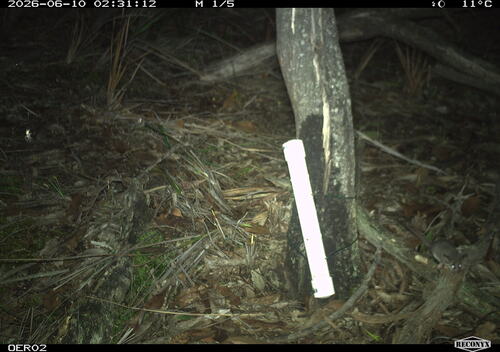
A small pygmy possum of south-eastern Australia with at least ten different common names documented over its history, until a committee of the Australian Mammal Society finally standardised its official name.
Very small, weighing 15 to 43 g, with a body of 7 to 9 cm and a prehensile tail of 8 to 11 cm; two subspecies are recognised, one from Tasmania and one from mainland Australia, differing only in minor details.
Arboreal, it moves through the forest with the help of its prehensile tail. By day it shelters in tree hollows or in nests hidden in dense vegetation.
Forest and scrub of south-eastern mainland Australia and Tasmania.
Mainly palynivorous and nectarivorous; feeds on pollen and nectar of native flowers.
Arboreal and nocturnal, it moves with the help of its prehensile tail. It has many historical common names, which reflect how much it has drawn the attention of naturalists over time despite its small size.
Widely distributed species considered Least Concern, with no sign of significant decline at global scale.
No major threats have been identified at global scale.
See all species accounts for kangaroos and koalas · Full species index
Mammaling is a free app for logging the mammals you find. You record a sighting in a moment — even if it's just a track — your life list grows, and the record becomes available to scientific and conservation projects.
It runs on your phone with nothing to install. If you like, it adds to your home screen like any other app.
Open Mammaling