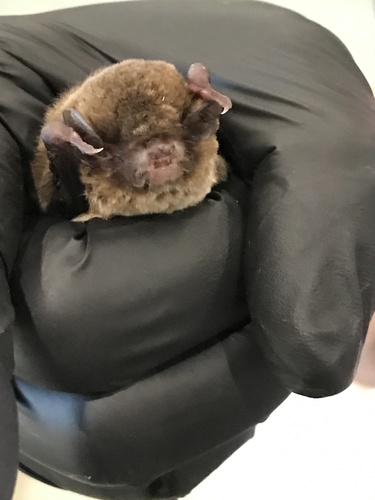
A fast, agile flyer from southern Australia and Tasmania, capable of turning sharply in mid-flight while chasing moths. In the Pilbara region, the Chocolate Wattled Bat shares the stage with two other iconic bats of north-western Australia, the Ghost Bat and the Orange Leaf-nosed Bat.
The chocolate-coloured fur gives the Chocolate Wattled Bat its common name. It possesses the fleshy lobes at the corners of the mouth characteristic of its genus, although taxonomic research into its isolated populations remains limited.
It roosts in tree hollows and also reuses abandoned, bell-shaped mud nests of Fairy Martins, often under concrete bridges. It also inhabits roof cavities.
A wide variety of habitats across southern Australia, including Tasmania, from sea level to at least 1,570 m altitude. In the Pilbara region, it forages in riparian habitat.
Insectivorous; fast and agile in flight, capable of turning sharply while chasing moths and other prey.
Fast and agile in flight, performing sharp turns while hunting. It reuses abandoned Fairy Martin nests as roosts, and in the Pilbara region it coexists with two other geographically isolated bat species.
Widespread and considered Least Concern, with no evidence of significant decline.
No major threats have been identified at a global scale.
See all species accounts for bats · Full species index
Mammaling is a free app for logging the mammals you find. You record a sighting in a moment — even if it's just a track — your life list grows, and the record becomes available to scientific and conservation projects.
It runs on your phone with nothing to install. If you like, it adds to your home screen like any other app.
Open Mammaling