In 1991 a UN agronomist photographed an unmistakable set of Schomburgk's deer antlers in a shop in Laos. The species had been written off in 1938. In 2019 someone looked at those photographs properly.
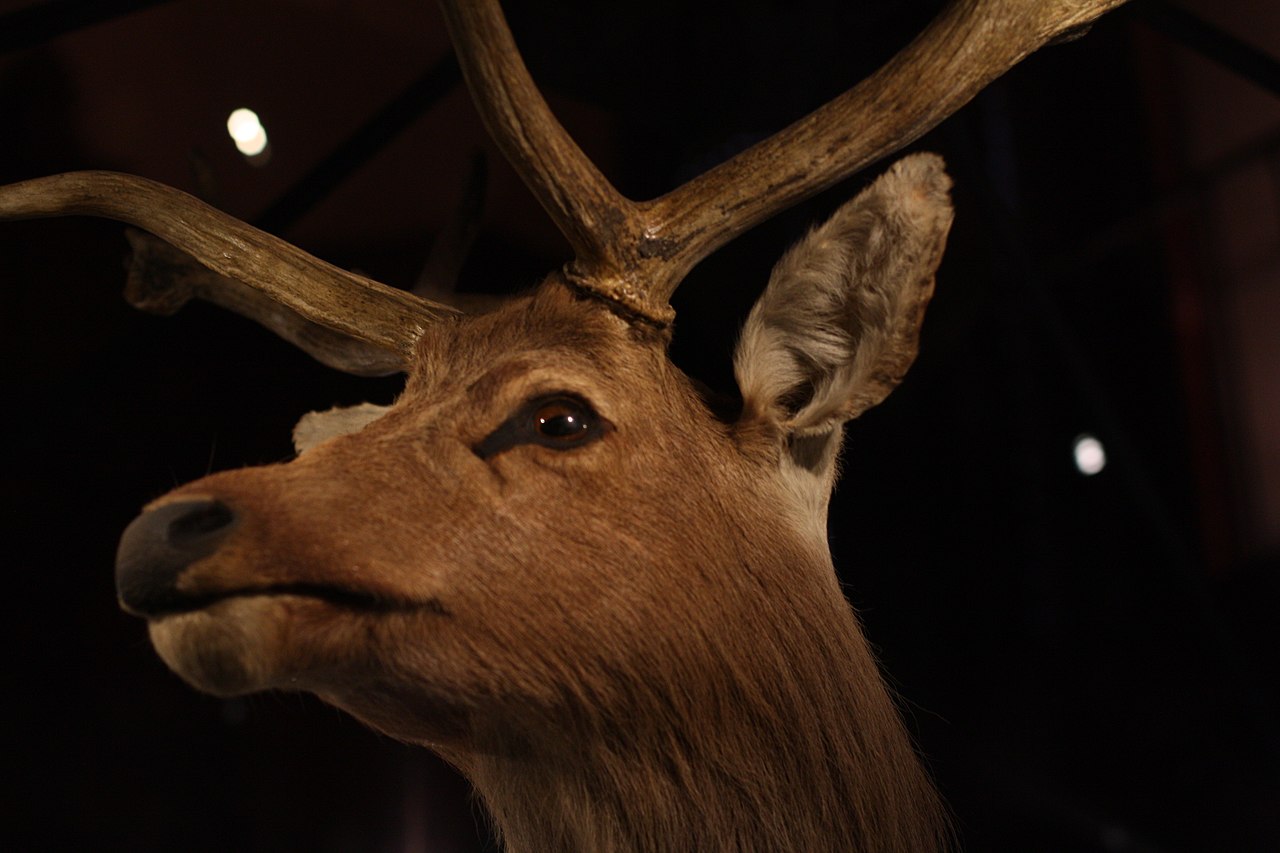
Schomburgk's deer lived in the swampy plains of the Chao Phraya valley, in central Thailand, and Edward Blyth described it in 1863. The stags carried antlers unlike those of any other deer: branched into a basket shape, with up to thirty-three points and an outer edge close to ninety centimetres. Nobody who has seen them once mistakes them. That shape, which doomed the animal as a trophy, is also the only thing that allows it to be identified today from a photograph.
What finished it was not hunting but rice. In the late nineteenth century Thailand began growing rice for export, and the swamps the deer needed became fields. During the floods the herds were pushed onto the higher ground that stayed dry, where they were easy targets. The wild population is thought to have gone by 1932. The last known animal lived at a temple in Samut Sakhon and was killed by a drunk man in 1938. The only mounted specimen in the world is in the Muséum national d'Histoire naturelle in Paris.
In February 1991, Laurent Chazée, an agronomist with the United Nations, walked past a Chinese medicine shop in Phongsali province, northern Laos. Hanging on the wall was a set of antlers with the unmistakable basket shape. He photographed them. For twenty-eight years those photographs were nothing more than an anecdote from someone passing through.
In 2019, Gary Galbreath of Northwestern University and G. B. Schroering published them in the Journal of the Bombay Natural History Society. What they examined was not the shape — that had been clear from the start — but the condition. The blood on the antlers was dark red tending to reddish-brown, and dried blood turns black with age. Exposed marrow remained, with dried marrow still attached to the bone. In the tropics, they concluded, antlers do not look like that even after a few months.
It is worth being clear about what that means and what it does not. It does not mean there is a population: it means one animal of this species was alive around 1991, fifty-three years after the species was written off. Galbreath suspects a small group may survive somewhere remote in central Laos. The IUCN Red List has listed it as Extinct since 2006, and without an animal, a photograph of one, or a sample, that is where it will stay.
The striking thing about the case is not the deer but who saw it. It was not an expedition or a camera trap: it was someone working on something else, in a place where nobody was looking, who had the reflex to take out a camera. Almost every rediscovery of a lost species looks like this one. Which is why it matters to record what you see, with its date and its photograph, even when it does not seem like much at the time.
Tus registros ayudan a saber dónde vive cada especie. Sin anuncios molestos y con los datos abiertos a la ciencia.
Abrir Mammaling